
Last updated November 22, 2026
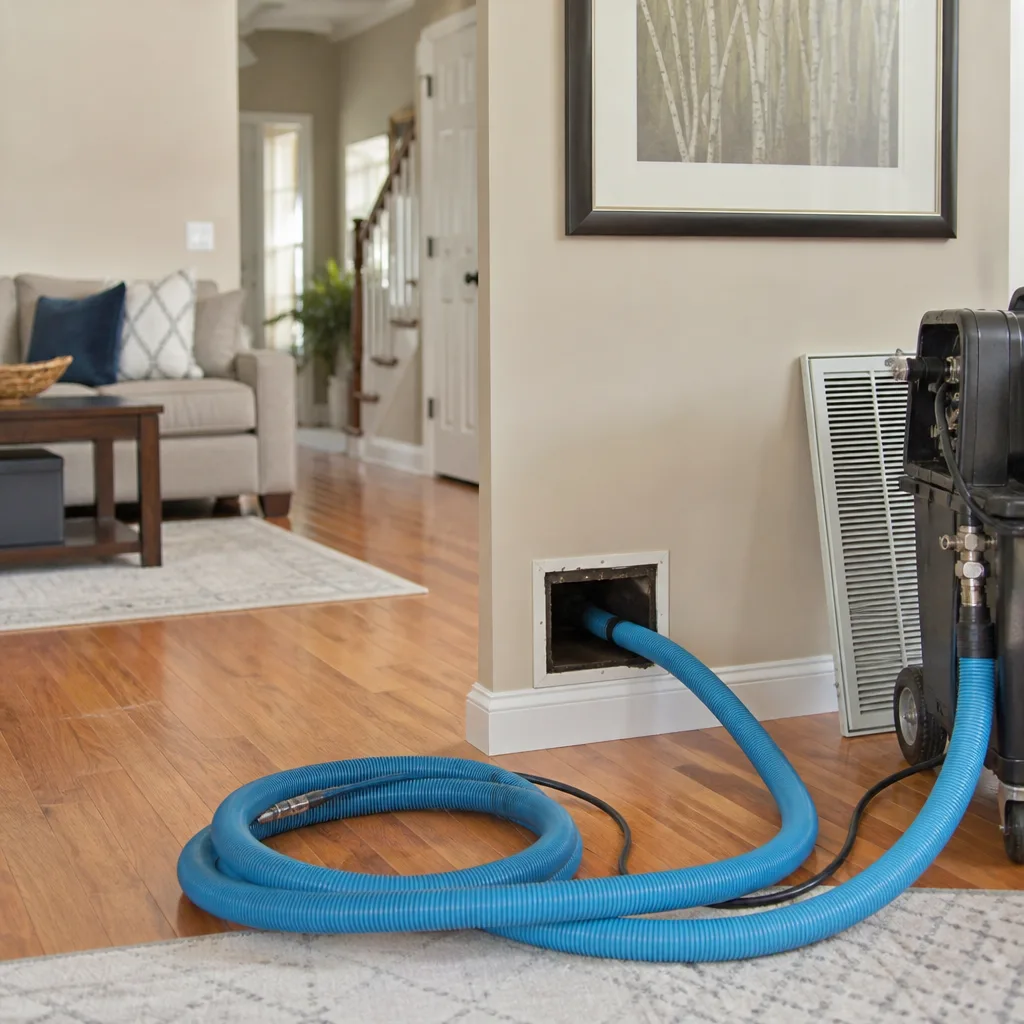 Whole-home duct cleaning
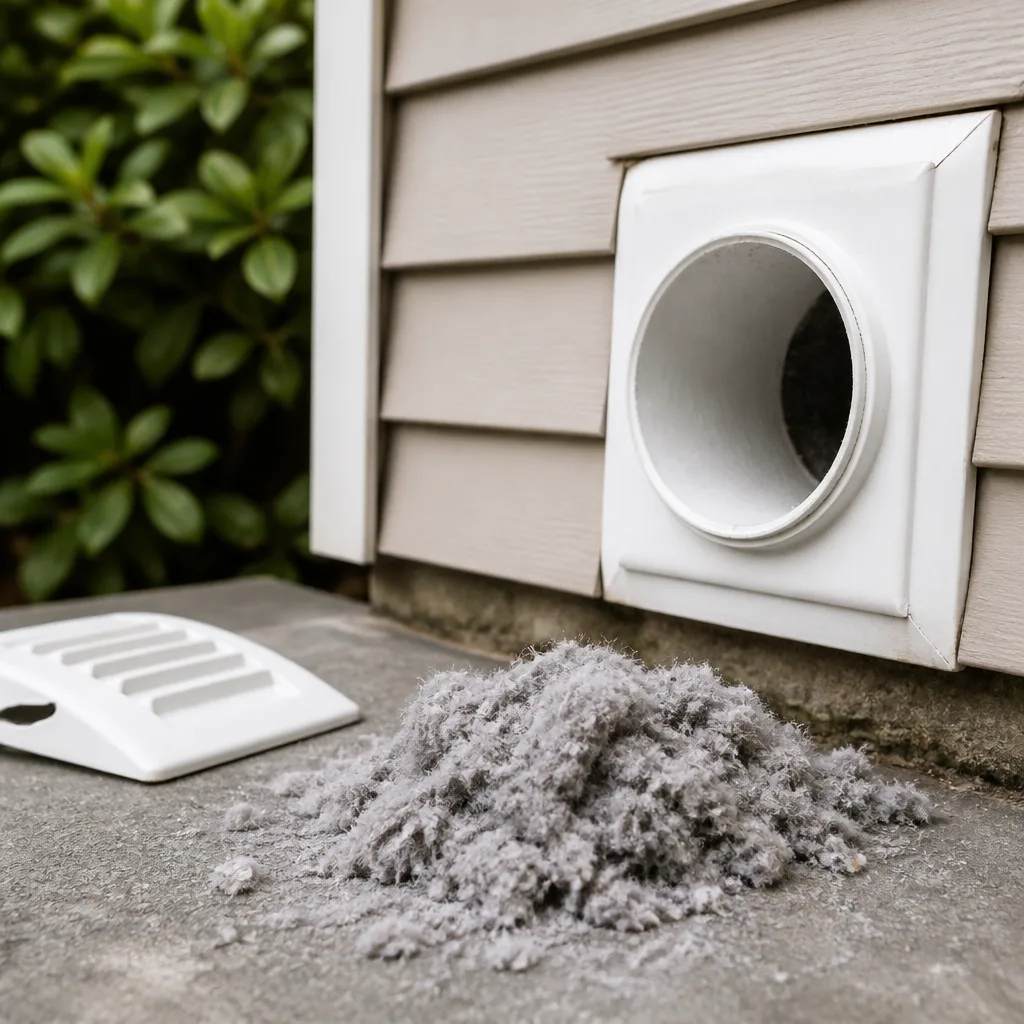 Dryer vent cleaning
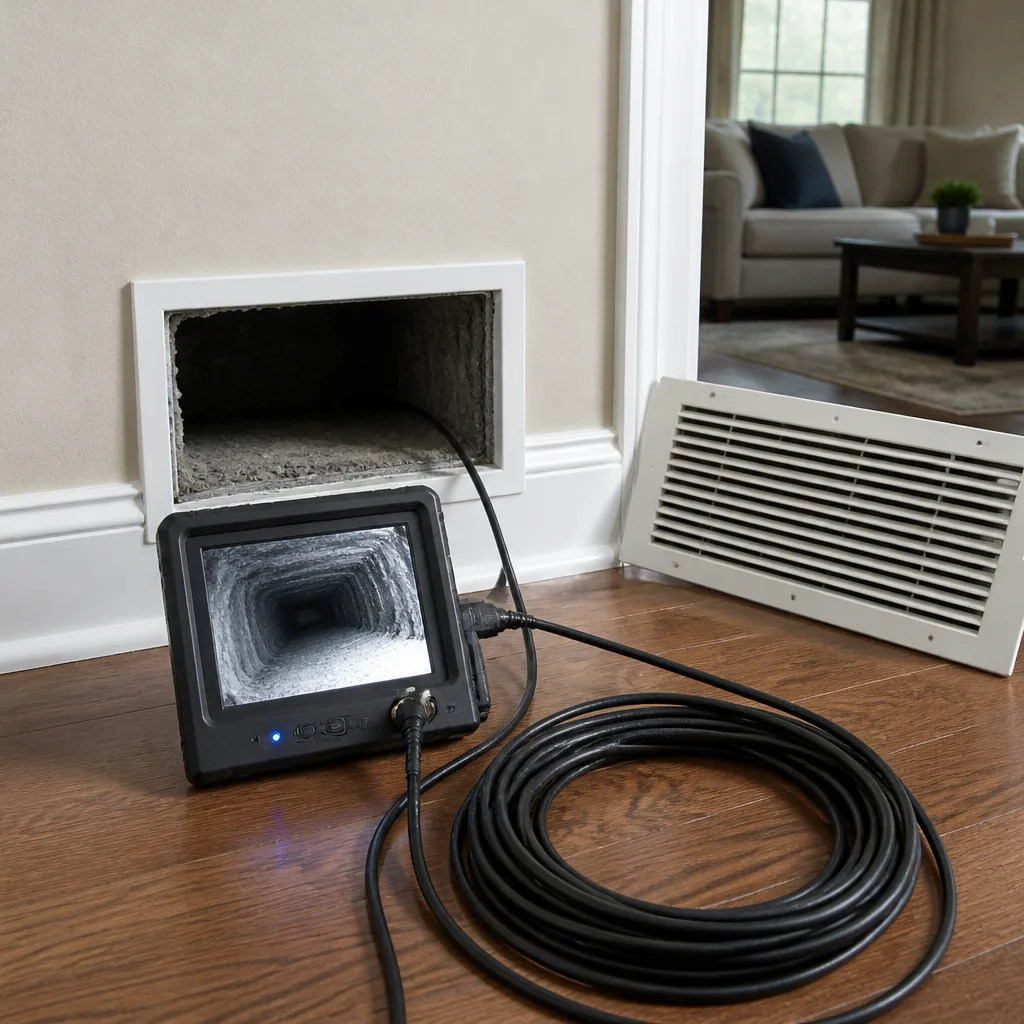 Camera inspection
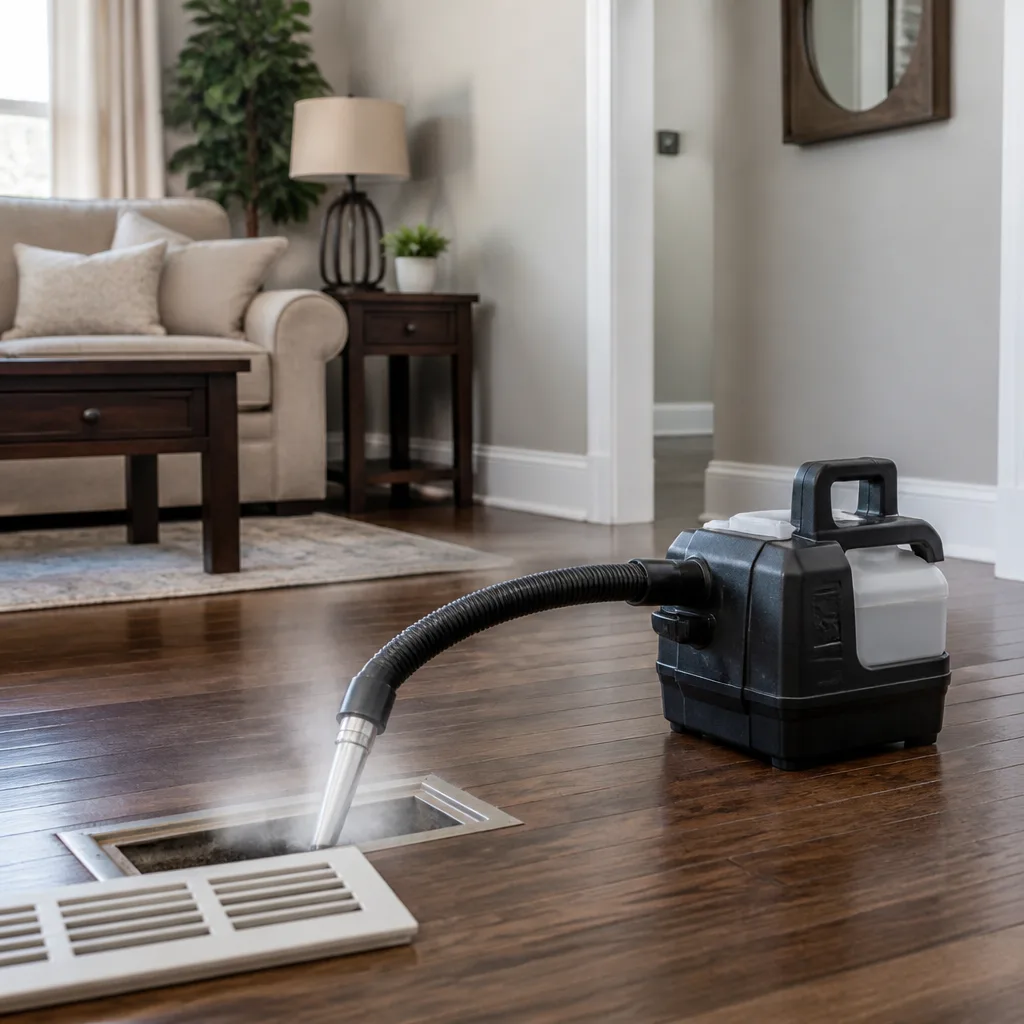 Sanitizing & deodorizing
Whole-system duct and dryer vent check with before-and-after photos - you see exactly what came out of your vents
That "$99 whole-house special" is a bait ad - the real number appears once they are in your hallway, or the "clean" is a shop-vac at the register. We photograph the inside of your ducts before and after instead.
DIY vs Professional Air Duct Cleaning: The Porter Ranch Homeowner’s Decision Guide
Most duct cleaning advice splits into two useless camps: “just vacuum your vents” and “never touch anything, call a pro.” Both skip the part that actually matters, which is where the line falls. A homeowner with a HEPA shop vac and a brush kit can genuinely improve accessible register boots and short straight runs. That’s real work, not busywork. But somewhere inside your walls, the physics changes. This guide maps that boundary for Porter Ranch homes with specifics: what consumer equipment can and can’t move, why negative pressure is the whole game, what a thorough DIY attempt really costs once you count bags and hours, and when a hybrid approach saves money over the long run. By the end you’ll know which side of the line your house sits on.
Quick Answer
DIY air duct cleaning works for surface-level maintenance: register covers, shallow boot vacuuming, and disciplined filter changes. It does not work for debris lodged in long horizontal runs, sagging flex duct, or attic trunk lines, because a shop vac moves roughly 100 CFM while professional negative-pressure equipment moves 8,000 to 16,000 CFM. In Porter Ranch, where fine ash from wildfire season settles into ductwork, that gap decides whether contaminants leave the house or just get stirred into the air you breathe.
Styles & brands we work with
- Whole-home duct cleaning
- Dryer vent cleaning
- Camera inspection
- Sanitizing & deodorizing
Table of Contents
- The Physics: Why Suction Volume Decides Everything
- What a Porter Ranch Homeowner Can Legitimately Do Themselves
- Where DIY Capability Ends
- Porter Ranch Scenarios Where DIY Falls Short
- The Real Cost Comparison
- The Hybrid Approach: How to Stretch Professional Intervals
- A Step-by-Step Decision Framework
- Common Mistakes to Avoid
The Physics: Why Suction Volume Decides Everything
A shop vac generates roughly 100 CFM of suction at the hose. Professional truck-mounted duct cleaning equipment generates 8,000 to 16,000 CFM. That’s not a marginal difference in a marketing brochure. It’s the difference between stirring debris around and actually extracting it from a 40-foot duct run.
Here’s why the number matters so much. Duct systems are designed to move air, and moving air is exactly what keeps loose debris suspended. When you clean a duct with weak suction, you introduce turbulence without enough draw to carry particles out of the system. The debris lifts, travels a few feet, and settles again, sometimes in a section of duct closer to a supply register than it was before. You haven’t removed anything. You’ve relocated it.
Professional negative-pressure cleaning works the opposite way. The equipment pulls the entire duct system into vacuum, so when a contact brush or air whip disturbs debris in a run, the pressure differential carries it back toward the collection unit rather than into the room. That’s the principle behind the contact-cleaning systems we use, including Rotobrush and Nikro platforms. Restoration and remediation contractors rely on the same class of machinery because it’s the only class of machinery that contains what it loosens.
A few terms worth knowing, because they show up on every quote you’ll compare:
- CFM (cubic feet per minute): the volume of air the equipment moves. The engine of the whole operation.
- Static pressure: the resistance inside your duct system. Long runs, elbows, and undersized ducts all increase it, which is why a weak vacuum in the driveway is an even weaker vacuum at the far end of a trunk line.
- Negative pressure: the sealed vacuum state that keeps disturbed debris inside the system and headed toward the collection unit instead of into your living room.
- Contact cleaning: physically agitating duct surfaces with brushes or whips while under vacuum, because settled debris doesn’t lift on airflow alone.
So the honest framing isn’t “DIY is dangerous, never try it.” It’s “DIY reaches the first few feet and the surfaces you can touch.” Beyond that, the equipment defines the outcome. For a deeper look at what full-system cleaning actually involves, see our air duct cleaning page.
What a Porter Ranch Homeowner Can Legitimately Do Themselves
Let’s give DIY its due, because there’s a real list of tasks a careful homeowner can do well. These are worth doing whether or not you ever hire anyone.
Register cover cleaning. Pop the supply and return grilles off and wash them in a tub with mild soap. Dust and lint build up on the vanes and get pushed back into the room every time the system runs. This is a fifteen-minute job per grille and it genuinely improves what you breathe.
Shallow boot vacuuming. The boot is the sheet-metal box right behind the register where the duct meets the room. With the grille off, you can reach into the boot with a HEPA shop vac and a soft brush attachment and pull out the loose debris that collects there. A HEPA-rated vacuum matters here; a standard shop vac will exhaust fine particles straight back into the room. Work gently and don’t force a brush down the duct beyond where you can see. You’ll dislodge debris you can’t retrieve.
Filter discipline. This is the highest-value DIY task on the list and the one most homeowners neglect. Check your filter monthly during heavy-use months and replace it on the schedule your system calls for. A clogged filter raises static pressure across the whole system, which stresses the blower and reduces airflow to every room. In a Porter Ranch home running the system hard through the hot months, that happens faster than the calendar suggests.
Return-side housekeeping. The return grille pulls from your living space, so keeping floors, baseboards, and the area around the return clear of dust reduces what gets drawn in. Nothing technical here, but it’s the cheapest contamination control there is.
Visual spot checks. A flashlight and a phone camera can tell you a lot. Look into accessible boots for debris accumulation, and check any exposed flex duct in the garage or attic for kinks, sags, or disconnected sections. You’re not fixing anything. You’re gathering information that will make a professional conversation far more useful.
Notice what’s missing from this list: anything past arm’s reach, anything in a horizontal run, anything under the house or above the ceiling. That’s the boundary.
Where DIY Capability Ends
There’s a specific point where consumer equipment stops being useful, and it’s not about effort or technique. It’s about reach and volume. Here’s what sits on the far side of the line:
- Long horizontal runs. The trunk lines running across a house can stretch 30 to 40 feet. A shop vac’s suction is essentially gone after the first several feet; the static pressure of the duct itself defeats it. Debris sitting mid-run stays there no matter how long you hold the hose.
- Elbow transitions. Every 90-degree turn in a duct is a debris trap. Air slows at the bend, particles drop out, and the accumulation builds in a spot you can’t see and a consumer vacuum can’t draw from.
- Sagging flex duct. Flexible duct installed with slack forms a low point, and debris pools in the belly of that sag. Negative-pressure cleaning with proper agitation lifts that material. Suction from one end of a sagging run does almost nothing.
- Attic trunk lines and second-story branches. Two-story Porter Ranch homes often route main trunks through the attic. Reaching that ductwork with consumer equipment means climbing into a space with heat, limited footing, and insulation, which is a genuine safety question before it’s an equipment question.
- Containment. This is the big one. Professional setups use negative-pressure containment, the kind of capability Abatement Technologies air-filtration equipment provides, so loosened debris and fine particles stay captured instead of migrating into living space. A shop vac has no containment envelope at all.
- Repair and sealing. Cleaning-only work misses disconnected joints, torn flex, and leaky seams. Professional service covers the full duct-system lifecycle, including repair and sealing, so problems found during cleaning get fixed in the same visit rather than deferred to a second contractor.
If any of that describes your system, DIY isn’t the wrong choice because it’s cheap. It’s the wrong choice because the tools can’t complete the task. We cover the equipment side in more detail on our air duct cleaning Porter Ranch page.
Porter Ranch Scenarios Where DIY Falls Short
General physics is one thing. Local conditions stack on top of it, and Porter Ranch has a few that push the DIY boundary in specific directions.
Wildfire ash infiltration. This is the dominant local factor. Porter Ranch sits in the northern San Fernando Valley, and when wildfire season sends smoke and ash across the area, the fine fraction is what matters. Ash particles in the PM2.5 range are small enough to pass through standard filtration and settle deep in ductwork, and they don’t behave like ordinary house dust. Fine ash requires HEPA-grade extraction under containment. A shop vac running a non-HEPA bag will lift that material and exhaust a portion of it back into the room, which is worse than leaving it settled. This is where remediation-level air filtration earns its keep, and it’s why we keep Abatement Technologies equipment in the toolkit.
Flex-duct systems with sags. A large share of Porter Ranch homes were built with flex duct in the attic runs, and flex duct that isn’t properly supported develops low spots. Every sag is a debris reservoir. The homeowner can see the sag with a flashlight and can’t do a thing about what’s pooled inside it.
Two-story homes with attic trunk lines. The second-story branches on a two-story Porter Ranch home typically originate from a trunk in the attic. That means the dustiest, hardest-to-reach ductwork in the house is also the ductwork feeding the bedrooms. Accessing it safely is a professional task.
Renovation dust. Drywall dust from a remodel is heavier and more abrasive than house dust, and it settles through the return system during construction. If you’ve recently renovated, the ducts are holding material that a register-cleaning pass won’t touch, and drywall dust is one of the categories containment equipment exists to handle.
Hot, dry summers and constant runtime. Porter Ranch summers keep the HVAC system running for long stretches, which means more air cycles through the ducts and more opportunity for settled debris to become airborne debris. A system that runs hard all summer distributes whatever is sitting in the ducts more thoroughly than a system that runs occasionally.
None of this makes DIY pointless. It makes it partial. The register boots get clean; the trunks stay loaded.
The Real Cost Comparison
A thorough DIY attempt is not free, and the honest accounting matters if you’re comparing it against professional service. Here’s what a complete do-it-yourself effort typically involves:
- Tool acquisition or rental. A HEPA-rated shop vac runs a few hundred dollars to buy, or a rental for a weekend. A homeowner-grade duct brush kit adds more on top.
- Consumables. HEPA filter bags and replacement filters for the vacuum, plus furnace filters for the system.
- Time. This is the line item most people leave out. A careful pass over every accessible register in a typical Porter Ranch home, start to finish, is a full day of work, often more if you’re learning as you go.
- The hidden cost: redistribution. If negative pressure isn’t maintained while you work, loosened debris gets pushed into living space. That shows up as dust settling on surfaces for days afterward, extra cleaning, and in sensitive households, a stretch of aggravated allergy symptoms. The work didn’t remove the contamination. It spread it.
- The incomplete job. Even a thorough DIY pass leaves the horizontal runs, elbows, and attic trunks untouched. So the deepest debris stays put, and the house isn’t actually cleaner where it counts. That’s the real inefficiency.
Professional service costs more up front, and it prices per system rather than per vent, with a written estimate setting the final number before work starts. What that buys is the CFM, the containment, and the reach that consumer tools don’t have, plus the before-and-after photos of your own ducts so you can verify the work rather than take it on faith.
The comparison isn’t “cheap DIY versus expensive pro.” It’s “partial cleaning with a redistribution risk” versus “complete cleaning with containment.” If your ducts only need register-level maintenance, DIY is the sensible call. If they’re holding ash, construction dust, or decades of accumulation in the trunk lines, the DIY spend buys a clean surface and a dusty house.
The Hybrid Approach: How to Stretch Professional Intervals
The smartest households in Porter Ranch don’t pick a side. They run a disciplined DIY maintenance loop and schedule professional cleaning on an interval, which extends the time between professional visits and lowers the long-run cost of keeping the system clean.
Here’s the loop that works:
- Monthly: Check the furnace filter. Replace it on the system’s schedule, sooner if it’s visibly loaded. This is the single highest-return task you can do.
- Seasonally: Pull the register grilles and wash them. Vacuum the accessible boots with a HEPA shop vac and a soft brush. Do this before heavy-use season and again after.
- Before and after renovation: Keep the return side sealed off while work is happening, and plan for a professional cleaning if the project generated significant dust.
- After wildfire smoke events: Change filters promptly, and if you can smell smoke indoors or notice fine dust on surfaces near returns, have the system assessed. Ash settles, and settled ash doesn’t leave on its own.
- On a multi-year interval: Schedule professional cleaning of the full system, including the trunk lines and attic runs, with repair and sealing checked at the same visit. The interval depends on your house, your filter discipline, and how much ash the local seasons have thrown at it.
The math on this tradeoff is straightforward. Every month you keep contamination out of the system with good filtration, and every season you clear the boots, you push the next professional cleaning further out. Households that run this loop consistently get more value from professional service because the professional visit starts from a maintained baseline rather than years of accumulation.
Part of a complete maintenance loop is HVAC cleaning, which addresses the equipment side of the system: the blower, the coil, and the components that move air. Clean ducts feeding a dirty air handler still circulate contamination, so the two services belong together on your schedule.
One more item for the maintenance list: dryer vents. Lint accumulation in a dryer vent is a fire risk, and it’s a separate system from your HVAC ducts with its own cleaning needs. Many homeowners fold it into the same visit as duct work. We cover it on our dryer vent cleaning page. Guardsman equipment is part of the picture here, alongside the duct cleaning systems.
A Step-by-Step Decision Framework
If you’re not sure which side of the line your house is on, walk through this in order. Each question narrows the answer.
- Can you see the contamination? Pull a register grille and look into the boot with a flashlight. A thin dust film is normal. A visible mat of debris, ash, or construction dust changes the answer.
- Has anything entered the system recently? Wildfire ash, renovation dust, water intrusion, or pest activity all point toward professional cleaning, because those materials need containment and HEPA-grade extraction.
- How old is the house, and how long since the last cleaning? A newer Porter Ranch home with no recent events is a good candidate for maintenance-level DIY. A house that hasn’t had a full cleaning in many years has accumulation in runs you can’t reach.
- Do you have flex duct in the attic, or a two-story layout? If yes, the dustiest parts of the system are out of easy reach and the direct answer is a professional visit.
- Is anyone in the household sensitive? Allergies, asthma, young children, or older adults raise the cost of redistribution mistakes. Containment matters more, not less.
- Have you checked for leaks and disconnected joints? Look at visible flex runs for tears or separations. Cleaning without repairing a disconnect just loads the space around the duct. Full lifecycle service handles cleaning and sealing together.
- Decide, then schedule the maintenance loop. Whichever way you go, put the monthly filter check and the seasonal boot cleaning on your calendar. That’s the habit that makes the next professional visit cheaper or the next DIY pass meaningful.
If several of those questions pointed toward professional service, the next step is a conversation, not a purchase. An estimate with the equipment and process explained up front tells you more than any comparison chart.
Common Mistakes to Avoid
- Using a standard shop vac without HEPA filtration. The exhaust blows fine particles straight back into the room. If you’re going to DIY, HEPA-rated equipment isn’t optional, especially after a wildfire season in Porter Ranch.
- Forcing a brush deep into a duct. A brush that goes past where you can see will dislodge debris into a horizontal run you can’t vacuum. Now the debris is mobile and the system will lift it into your rooms for days.
- Cleaning only the visible registers and calling it done. The register boots are a small fraction of the system. The trunk lines and attic branches hold the bulk of what accumulates, and those are exactly the sections consumer equipment can’t reach.
- Ignoring the filter schedule. A loaded filter raises static pressure and reduces airflow while doing nothing to the debris deeper in the system. Filter discipline is the cheapest improvement available to any Porter Ranch home, and the most commonly skipped.
- Cleaning ducts without checking for leaks or separations. A torn flex run or a disconnected joint means the cleaning loads the surrounding space, not the duct. Repair and sealing belong in the same visit, which is why we cover the full lifecycle rather than just the cleaning pass.
- Judging a quote on price per vent alone. Discount pricing usually means lighter equipment and no containment. The right question is which machine and which process, then what the written estimate covers.
- Skipping the post-ash follow-up. After a heavy smoke event, changing the filter promptly and checking for fine ash intrusion near returns matters more than the calendar. Ash settles and stays.
See the difference
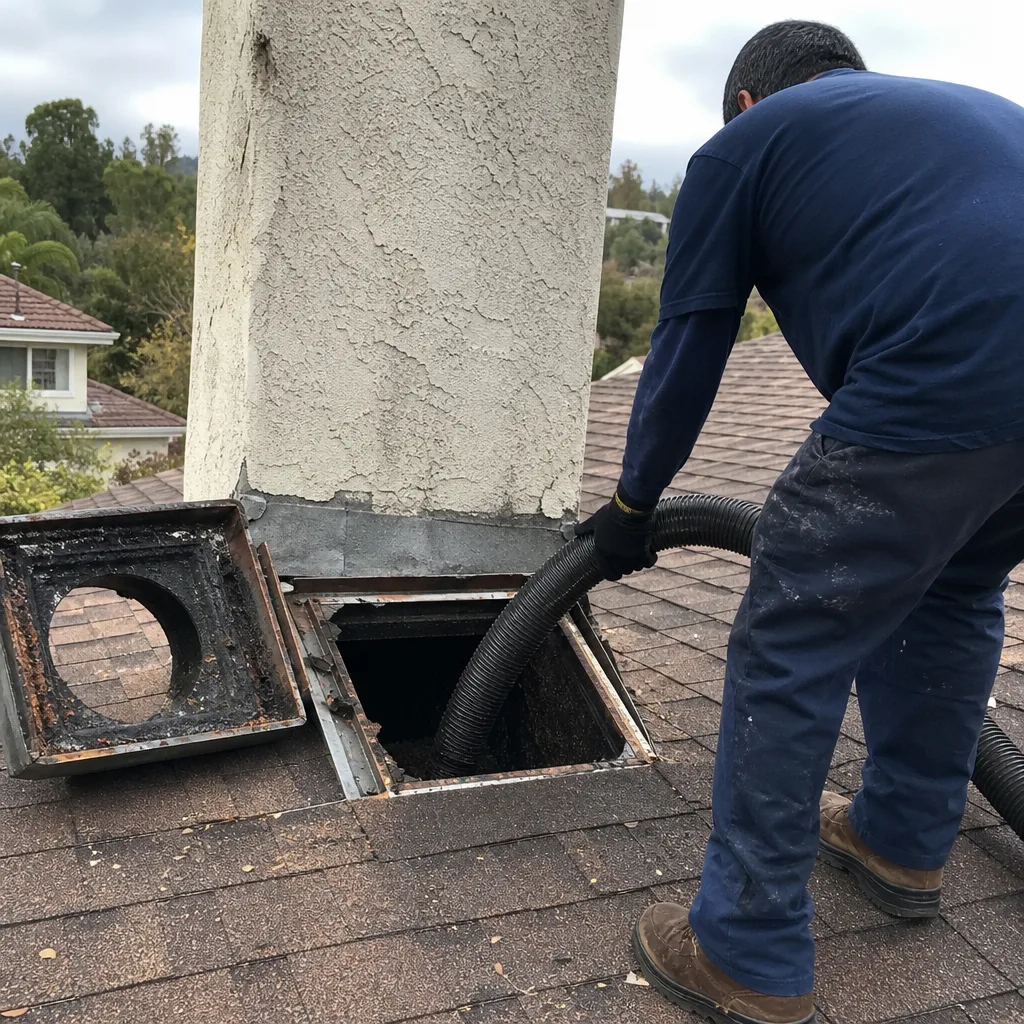 Before
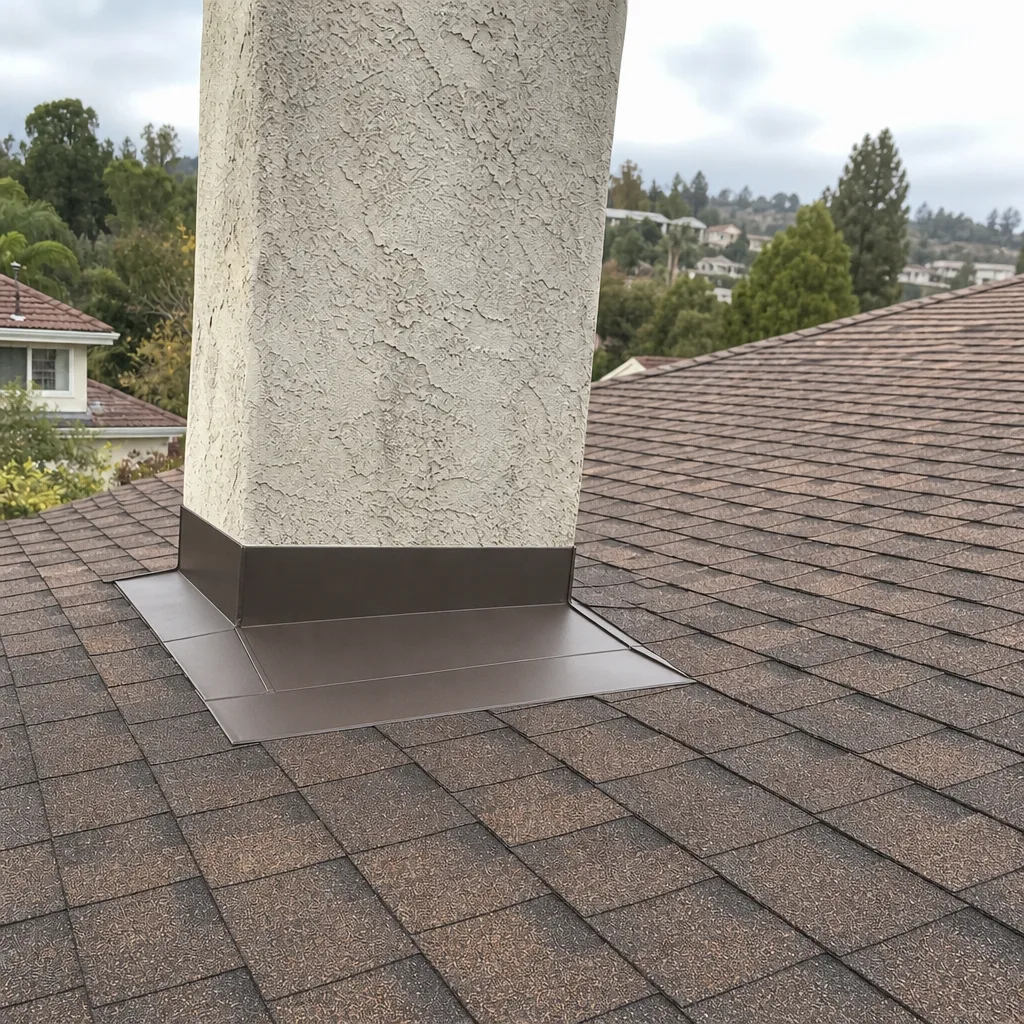 After
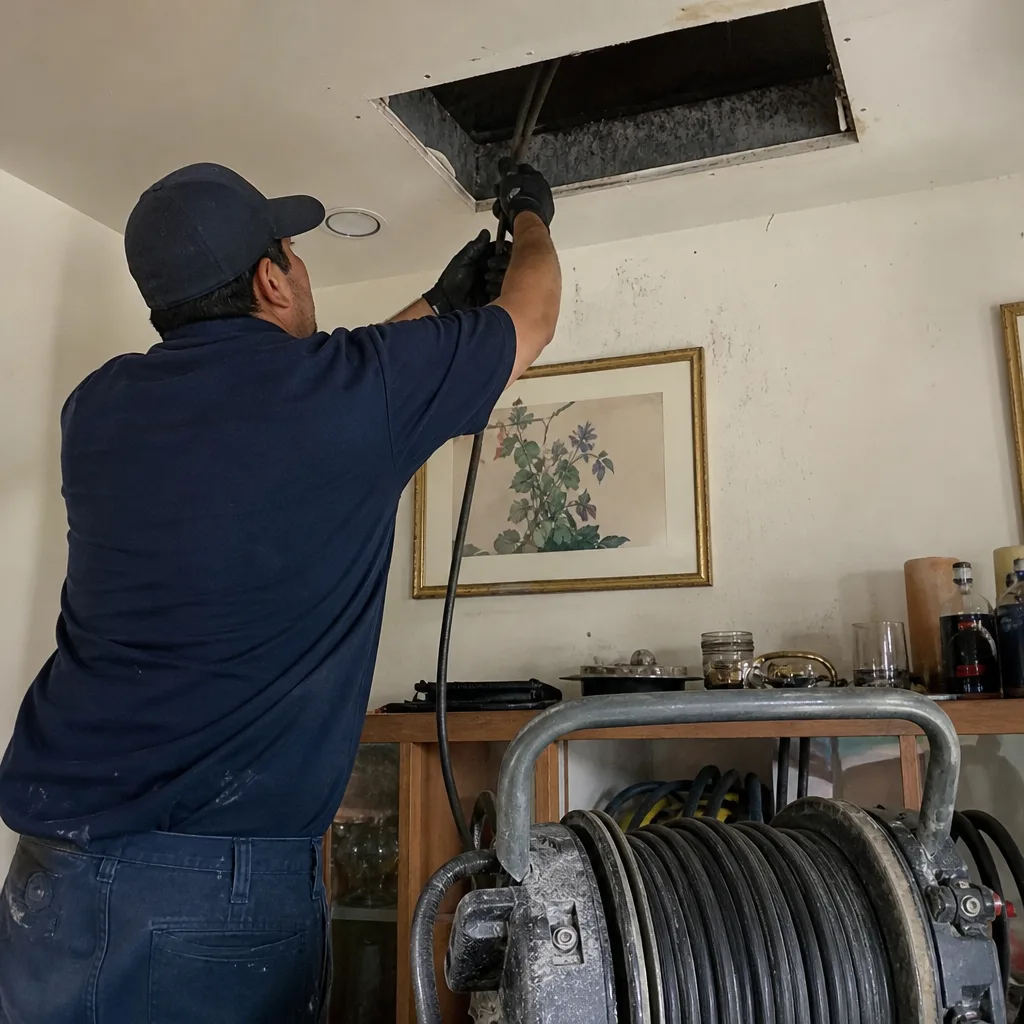 Before
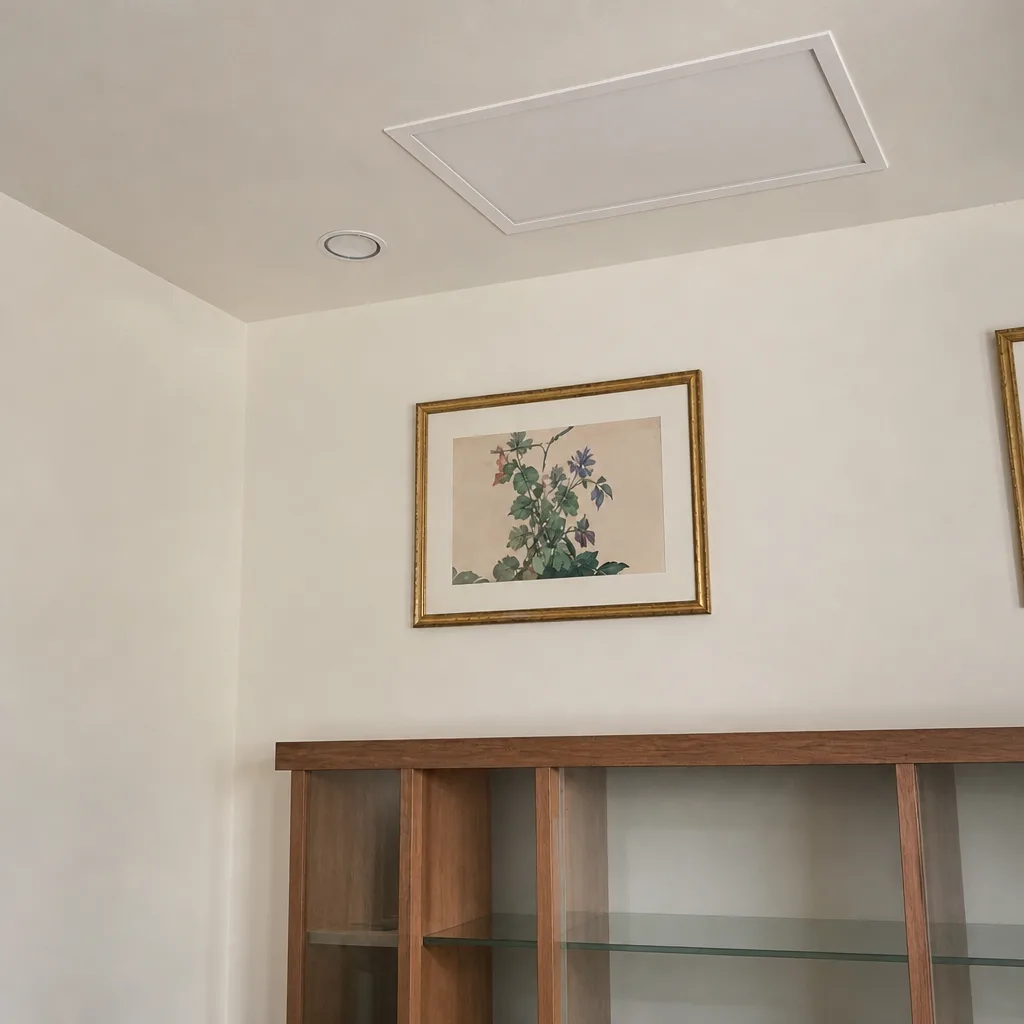 After
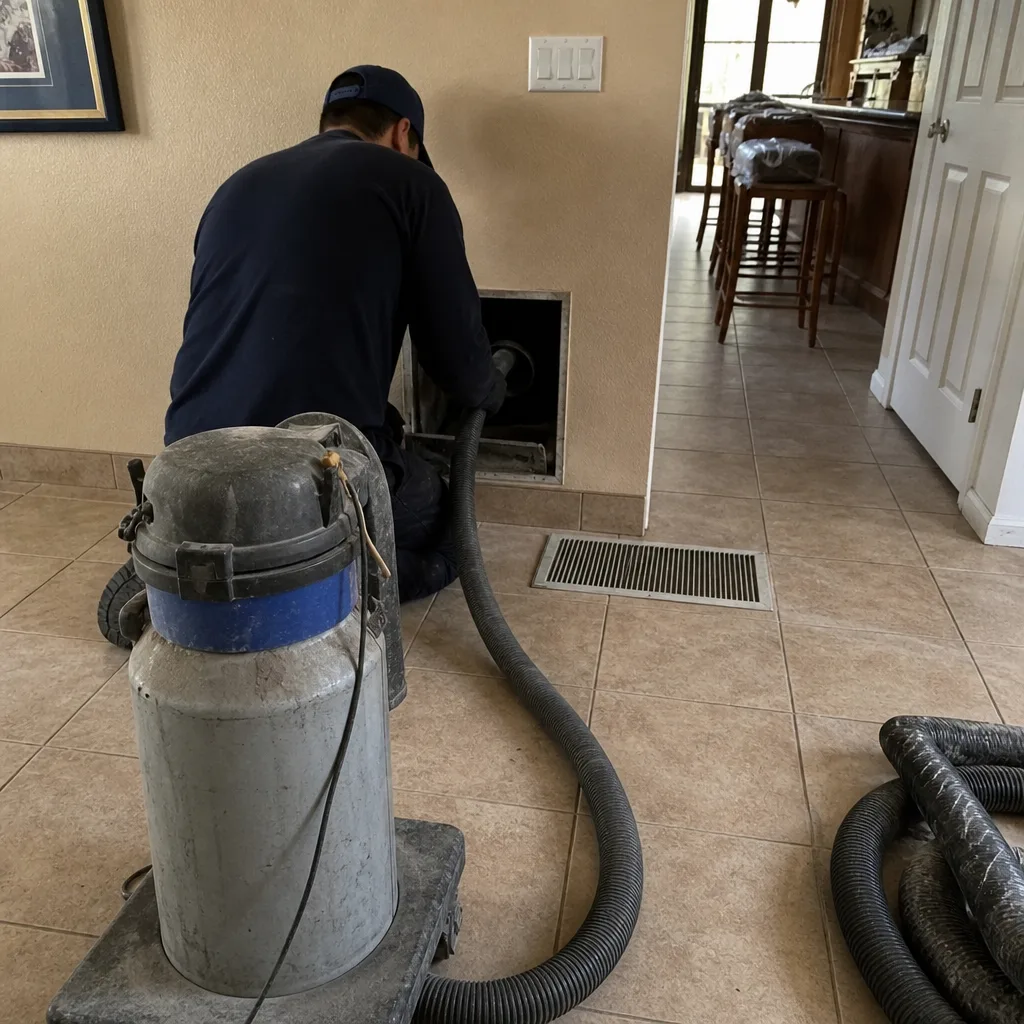 Before
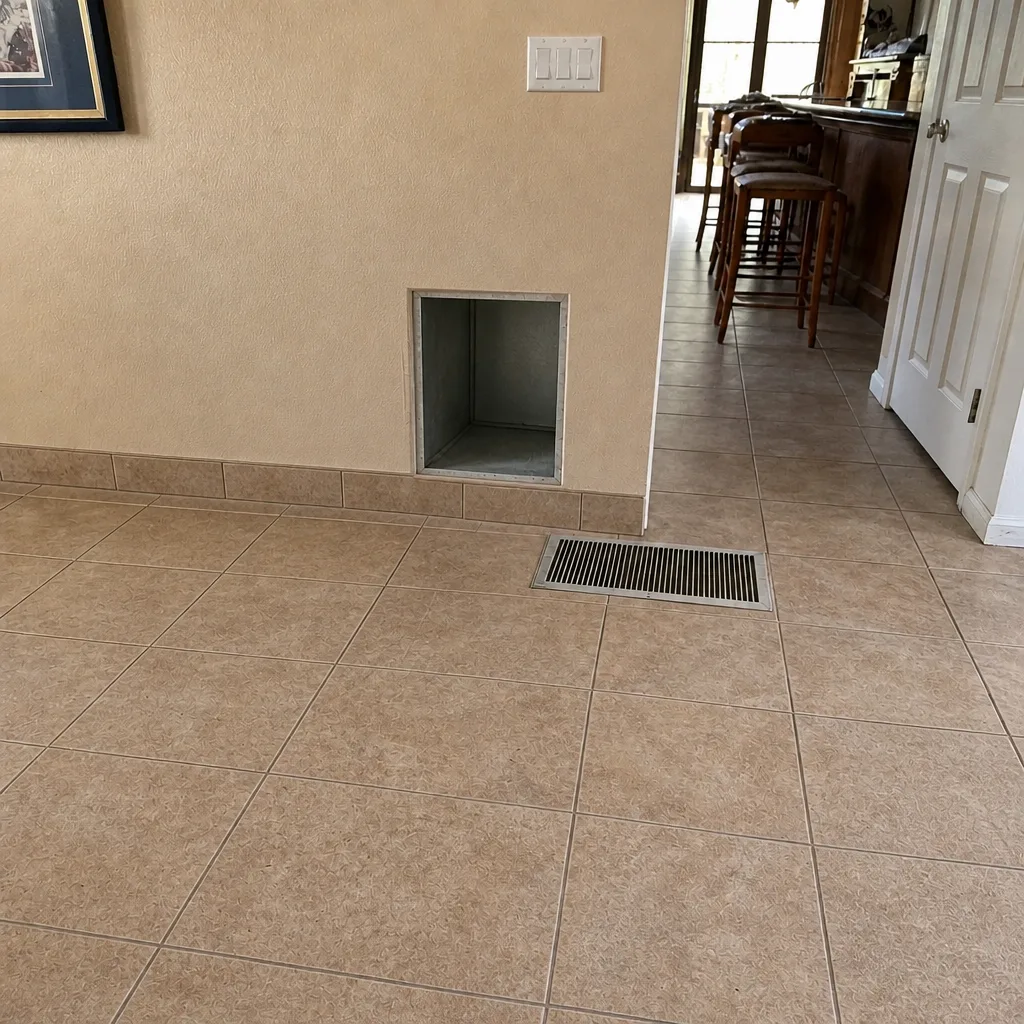 After
When to Call a Professional
Call a professional when the contamination source needs containment (wildfire ash, renovation dust, water or pest intrusion), when you have flex duct in the attic or a two-story layout with trunk lines out of reach, when visible debris sits in horizontal runs, or when anyone in the house is sensitive to airborne particles. Call when it’s been many years since a full cleaning, or when a DIY pass on the registers turned up evidence of a wider problem. Call when you spot a leak or disconnect and want cleaning and sealing handled together. Air Duct Cleaning Porter Ranch offers free estimates in Porter Ranch. Call (833) 570-5137. We answer 24/7. Fast dispatch from 7am to 7pm, Sunday through Friday.
Frequently Asked Questions
A shop vac can clean the accessible parts: register grilles, the boot behind each register, and the first foot or so of duct. It moves roughly 100 CFM, so it can’t draw debris out of long horizontal runs or lift material pooled in a sagging flex duct. Those sections need professional negative-pressure equipment moving 8,000 to 16,000 CFM. Call (833) 570-5137 for an exact quote. Estimates are free.
Expect a per-system estimate with the range set by the size and condition of your ductwork, not a per-vent price. The written estimate sets the final number before work starts, so there are no surprises once the technician is on site. Call (833) 570-5137 for an exact quote. Estimates are free.
Cheap quotes usually mean lighter equipment, no containment, and a shorter pass that disturbs debris without extracting it. A low teaser price can become a larger invoice once the technician arrives. The right comparison is which machine and which process, then what the written estimate covers. Call (833) 570-5137 for an exact quote. Estimates are free.
Ask for before-and-after photos of your own ducts, not stock images. With contact cleaning and negative-pressure extraction, the difference in the runs and boots is visible. We photograph what we find and what we leave. Call (833) 570-5137 for an exact quote. Estimates are free.
There’s no single interval that fits every house. Filter discipline, renovation history, and how many wildfire smoke events your system has drawn through it all move the number. Households that change filters monthly and clean boots seasonally can stretch the interval between professional cleanings considerably. Call (833) 570-5137 for an exact quote. Estimates are free.
Yes, in one specific way: without negative pressure and HEPA extraction, loosened debris redistributes into living space instead of leaving the system. Fine ash after a smoke event is the worst case, because PM2.5 particles pass through ordinary filtration and settle deep. Containment is the reason remediation contractors use the equipment they do. Call (833) 570-5137 for an exact quote. Estimates are free.
The Bottom Line
DIY duct cleaning is legitimate for the reachable zone: register grilles, boot vacuuming with a HEPA shop vac, and filter discipline. That loop is worth running in every Porter Ranch home, and it makes professional cleaning less frequent. But the physical limit is real: consumer suction can’t move debris through long horizontal runs, can’t lift what’s pooled in sagging flex duct, and can’t reach attic trunk lines. And after wildfire ash or a renovation, containment matters as much as suction. Match the tool to the task, keep the maintenance loop running, and call when the job crosses the line. Our technicians have up to 14 years of experience, and we use the same equipment platforms restoration contractors trust.
Get a Free Estimate
If your Porter Ranch home has ductwork holding ash, construction dust, or years of accumulation in the runs you can’t reach, we’ll walk you through the process before any work starts. You’ll get a written estimate, before-and-after photos of your own ducts, and a per-system price agreed in advance. Call (833) 570-5137. We answer 24/7. Fast dispatch from 7am to 7pm, Sunday through Friday.
Written by the team at Air Duct Cleaning Porter Ranch.