
Last updated November 22, 2026
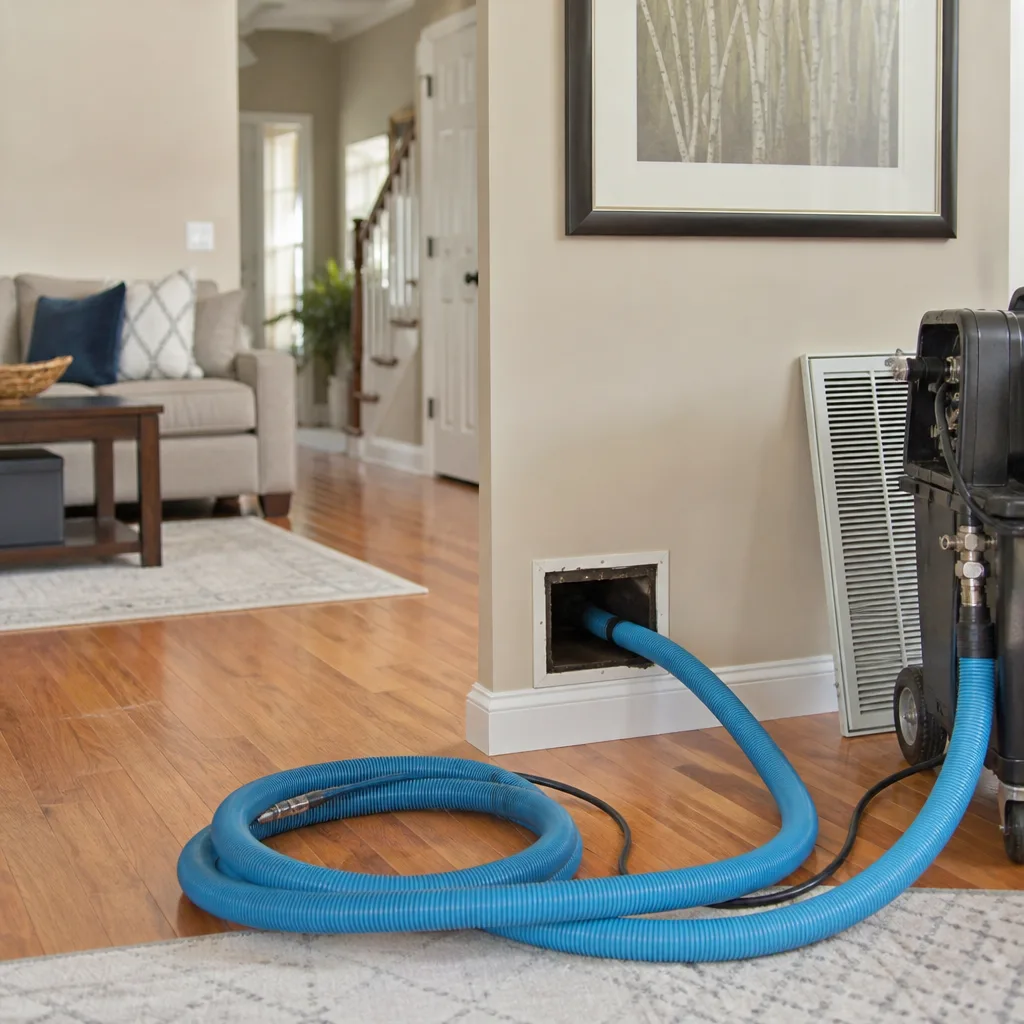 Whole-home duct cleaning
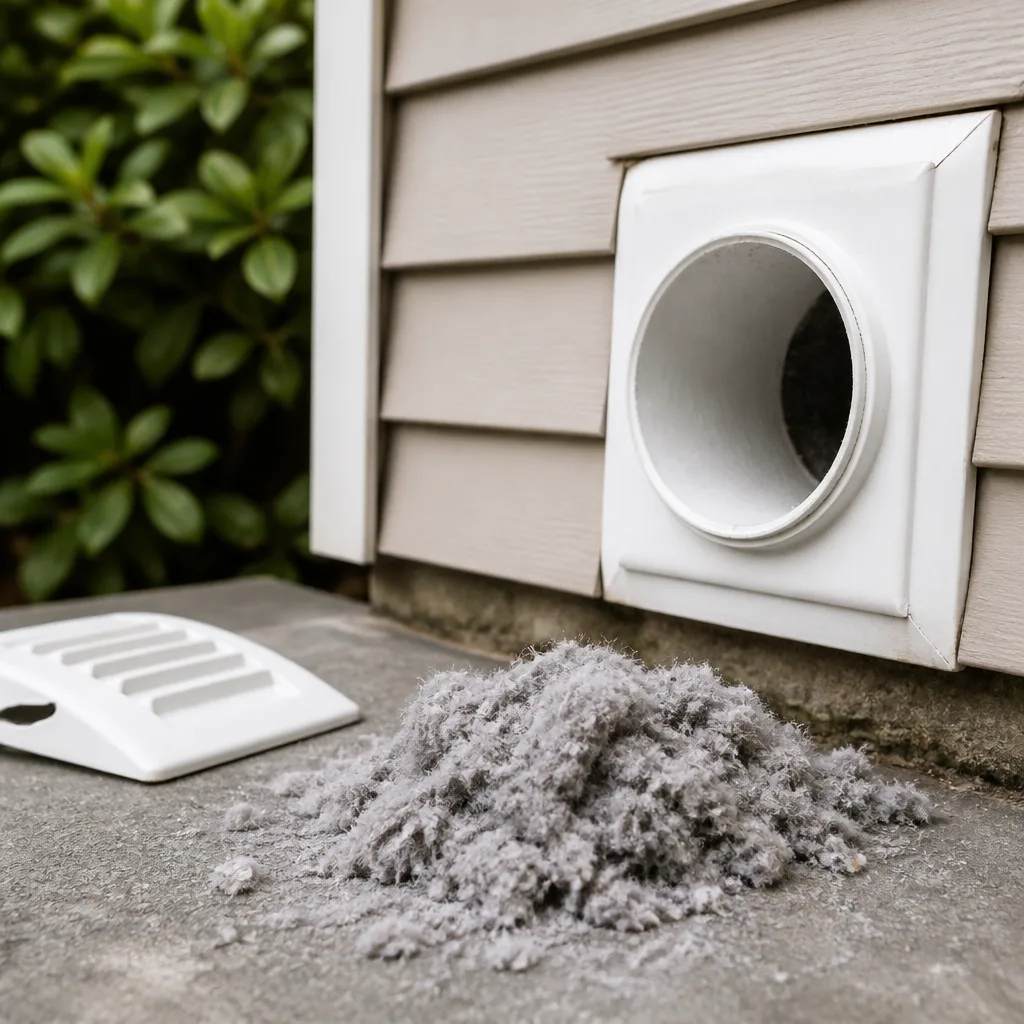 Dryer vent cleaning
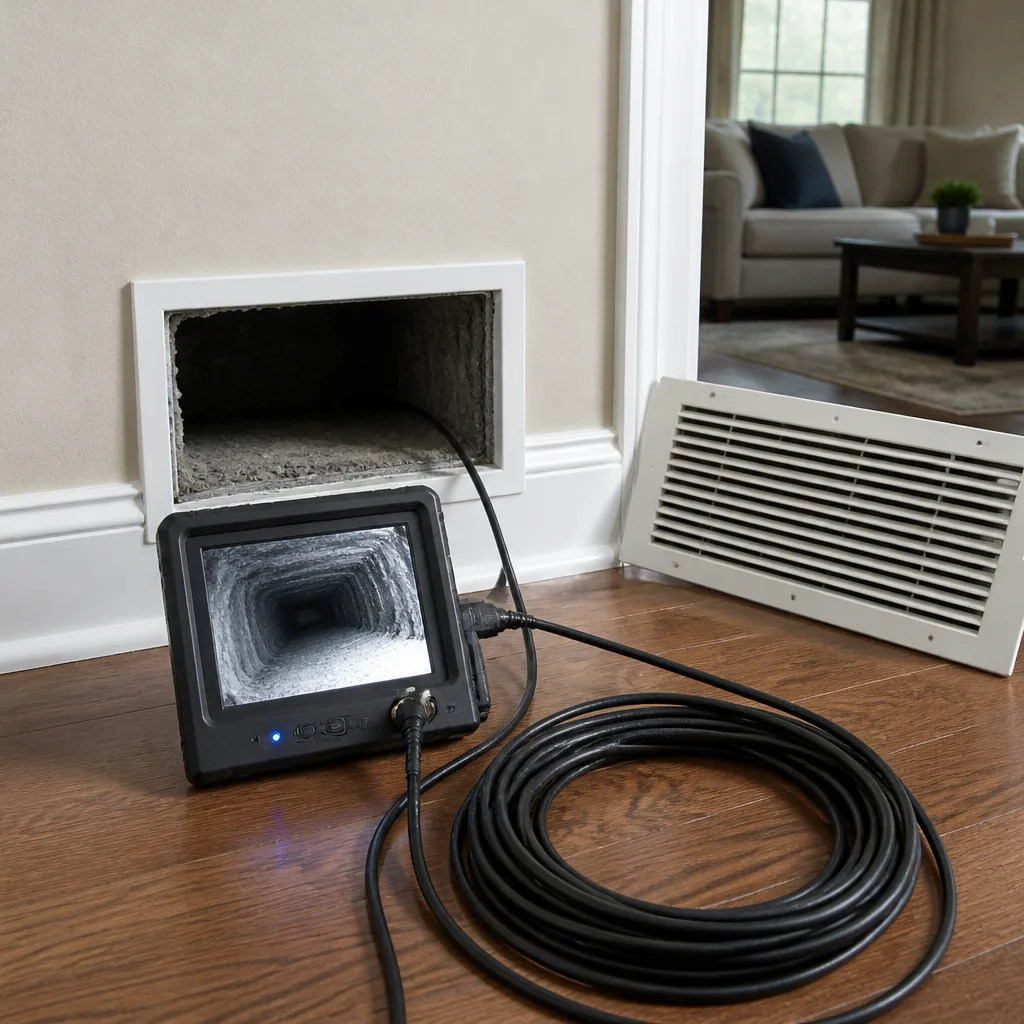 Camera inspection
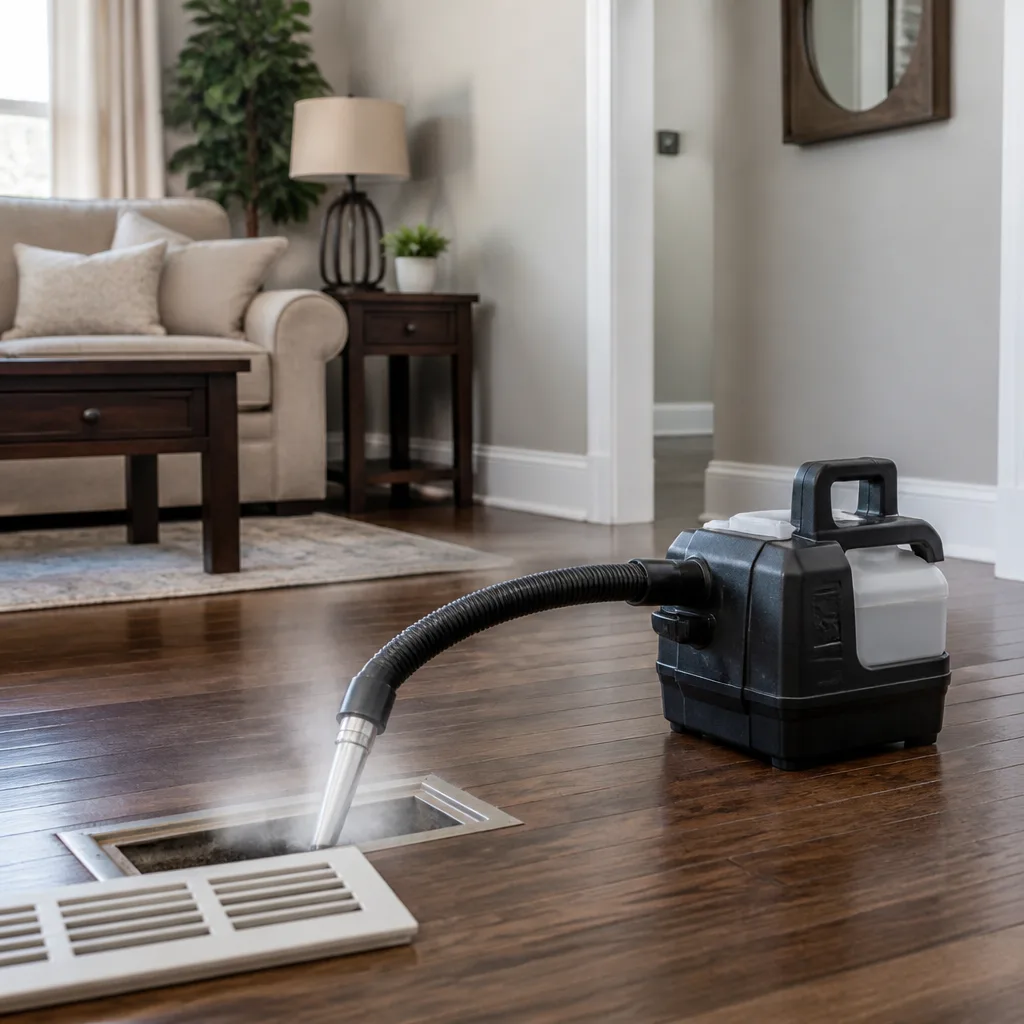 Sanitizing & deodorizing
Whole-system duct and dryer vent check with before-and-after photos - you see exactly what came out of your vents
That "$99 whole-house special" is a bait ad - the real number appears once they are in your hallway, or the "clean" is a shop-vac at the register. We photograph the inside of your ducts before and after instead.
Air Duct Cleaning Maintenance Checklist for Porter Ranch Homeowners
Most duct-maintenance checklists online were written for climates with four seasons and steady humidity. That doesn’t describe Porter Ranch. Here, on the high-desert edge of the San Fernando Valley, a single Red Flag Warning week can push more particulate into your return vents than two years of ordinary operation. And that changes everything about when cleaning is actually due. The usual “every three to five years” advice was never built for a place where summer dust and fall wind events do the heavy lifting. What follows is a checklist keyed to observable triggers in your own home: how fast your filter grays out, what your HVAC runtime looks like, and the events that reset the clock. You’ll learn how to inspect your own registers in five minutes, when a pro visit can wait, and when it can’t. This guide is written for Porter Ranch homeowners who want evidence, not a calendar reminder.
Quick Answer
A duct-cleaning maintenance checklist for Porter Ranch should be driven by triggers, not a fixed calendar. Check your filter every 30 to 60 days, inspect registers with a flashlight after any wildfire smoke event, wind storm, or interior remodel, and clean when the filter-loading rate accelerates or visible debris appears. Most homes here land on an event-driven schedule, with annual or biennial cleaning reserved for households with pets, allergy sufferers, or heavy HVAC runtime.
Styles & brands we work with
- Whole-home duct cleaning
- Dryer vent cleaning
- Camera inspection
- Sanitizing & deodorizing
Table of Contents
- Why Standard Duct Advice Doesn’t Fit Porter Ranch
- The Filter-Loading Index: Your Best Contamination Gauge
- Post-Event Inspection Triggers and Your Home Log
- HVAC Checkpoints That Belong on the Same Checklist
- The 5-Minute Register Inspection
- Annual vs. Biennial vs. Event-Driven: Matching the Schedule to Your Home
- What a Professional Cleaning Actually Involves
- Don’t Forget the Dryer Vent
Why Standard Duct Advice Doesn’t Fit Porter Ranch
Porter Ranch sits at the northwestern edge of the San Fernando Valley, where the valley floor meets the Santa Susana Mountains. That geography produces a specific set of conditions. Summers are hot and dry. Winds funnel through the passes. And the community has seen repeated wildfire activity in the surrounding hills, which means smoke transport is a real seasonal concern rather than a hypothetical one. A duct system here is exposed to a particulate load that simply doesn’t match what a homeowner in a humid, green, four-season climate faces.
That mismatch matters because the popular “clean every three to five years” rule was reverse-engineered from homes where dust accumulates slowly and predictably. In Porter Ranch, accumulation isn’t slow or predictable. It spikes. A Red Flag Warning week, a nearby brush fire, a windy October, a kitchen remodel: any of these can deposit weeks or months of normal loading into your return system in a matter of days. Meanwhile, the quiet months between events add very little.
The practical consequence is that a fixed-interval schedule will be wrong in both directions. It will tell some Porter Ranch homeowners to clean when their ducts are genuinely fine, and it will leave others breathing through a fouled system because the calendar hadn’t rolled over yet. What you need instead is a way to read your own home’s signals.
We’ve built this checklist around that idea. Every item below is something you can observe, log, and act on. None of it requires special tools beyond a flashlight, your phone camera, and a filter you can look at. And when the signals point to professional work, you’ll know why, not just that someone told you so. The goal is air you can verify, not just claim.
The Filter-Loading Index: Your Best Contamination Gauge
Your HVAC filter is the single most useful diagnostic tool in your home, and most people never read it. Here’s the principle: a filter that loads quickly is telling you that a lot of particulate is entering the system. In a well-sealed home with clean ducts, a standard filter grays out gradually over its rated life. In a home with contaminated ducts, loose return connections, or ongoing dust intrusion, it darkens fast. The rate of loading, not the color alone, is your signal.
Here’s how to build a simple filter-loading index for your home:
- Start with a clean filter. Write the install date directly on the filter frame with a marker. This is your baseline.
- Check it every 30 days. Hold it up to a light. Note whether you can see light through it, and roughly how much of the surface has grayed.
- Record a rough percentage. “About a quarter gray at 30 days” is enough. Precision isn’t the point; the trend is.
- Track the change month to month. A filter that reaches half-loaded in 30 days in July but takes 60 days in January is telling you something real about seasonal dust.
- Watch for acceleration. If the loading rate suddenly speeds up after an event, that’s your trigger to inspect the ducts more closely.
In Porter Ranch, the high-dust summer months are where this gets interesting. Between the dry heat, the wind, and the amount of time the system runs, filters here tend to load faster in July and August than homeowners expect. If your filter is reaching half-loaded inside a month during summer, that’s a strong signal your return system is pulling in more particulate than it should. A single fast-loading filter isn’t proof of a dirty duct system, but a consistent pattern of it, month after month, usually means the ducts are holding a reservoir of dust that keeps re-entraining into the airstream.
This is where professional-grade equipment matters. A portable consumer vacuum can’t reach the settled debris in your duct runs, but a Rotobrush contact-cleaning system can agitate and extract it, which is why the loading rate drops after a real cleaning. If you want the technical detail on what that equipment does, our air duct cleaning guide covers it.
Post-Event Inspection Triggers and Your Home Log
In Porter Ranch, events move the maintenance needle more than time does. The right response to that is a simple running log. It doesn’t need to be elaborate. A note on your phone or a page in a kitchen drawer works. What matters is that you capture the dates and types of events that load your system, so you can correlate them with what you find during inspections.
Here are the triggers worth logging and inspecting after:
- Wildfire smoke events. When smoke is in the air for days, fine particulate works its way into the return system even with windows closed. Inspect registers and the filter a week or two after the event clears.
- The Diablo wind season. The dry offshore winds that arrive in fall carry dust and ash from surrounding terrain. A windy stretch is a legitimate inspection trigger.
- Any interior remodel. Drywall dust, sawdust, and demolition debris are far heavier loads than ordinary household dust. Cover registers during the work, then inspect afterward.
- Roofing or exterior work. Tear-offs and exterior projects send fine debris into the air around the home. Inspect the return side afterward.
- Moving in or out. A home that sat empty or had heavy foot traffic deserves a look at the filter and registers.
- Any water intrusion or mold concern. Moisture in the system changes the cleaning equation entirely. This is where containment-grade equipment like Abatement Technologies air-filtration units earns its place, because it lets a technician work without spreading contaminants through the house.
A simple log entry looks like this: “Oct 12 – Red Flag Warning, strong wind, smoke visible to the west. Checked filter Oct 20, ~40% gray. Register inspection: light dust at supply, no debris.” That’s all it takes. Over a year or two, your log becomes a genuinely useful record, and it tells a technician far more than a vague memory of “it’s been a while.”
One more thing worth noting: a wildfire smoke event doesn’t automatically mean your ducts need cleaning. It means your ducts need inspecting. The distinction matters, and it’s the difference between a rational maintenance decision and a knee-jerk one. If the interior of the ducts looks fine and the filter loading returns to baseline, you can reasonably wait.
HVAC Checkpoints That Belong on the Same Checklist
A clean duct connected to a fouled coil still moves dirty air. This is the part most duct-maintenance checklists leave out, and it’s the reason we treat duct cleaning and HVAC cleaning as one job rather than two. The air handler is part of the air pathway. If you ignore it, you’re cleaning half a system.
Add these checkpoints to your own inspection routine. None of them require you to open the equipment; they’re visual and observational.
- Coil visual. With the filter removed and a flashlight, you can usually see the edge of the evaporator coil. It should look metallic and clean. A matted, gray, or fuzzy appearance means dust has built up on the fins, which restricts airflow and drives up runtime.
- Drain pan. Look for standing water, slime, or mineral buildup. A pan that isn’t draining properly is a moisture problem waiting to feed biological growth in the system.
- Blower wheel. A blower wheel caked with dust moves less air and throws off balance. If you can see the wheel, look at whether the blades are clean or coated.
- Return plenum and connections. Look for gaps, taped-over joints that have failed, or flex duct that’s pulled loose. A leaky return pulls attic or wall-cavity air straight into the system.
- Access door seal. The panel where the filter sits should seal snugly. A loose door lets unfiltered air bypass the filter entirely.
What you’re looking for here is anything that suggests the system is moving contaminated air or losing efficiency. A dusty coil plus a fast-loading filter plus visible dust in the supply registers is a strong case for a full-system cleaning. A clean coil with a slow-loading filter is a strong case for waiting. Most Porter Ranch homes fall somewhere in between, which is exactly why the checklist exists.
If your inspection turns up a fouled coil or a blower wheel that’s visibly coated, that’s a technician’s job. Cleaning a coil or pulling a blower requires the right equipment and a careful touch. Our technicians have up to 14 years of experience with this kind of work, and we use Nikro HVAC equipment to clean components in place without disassembly where the design allows it.
The 5-Minute Register Inspection
This is the most practical item on the checklist. You can check a register in about a minute, and what you find tells you whether a professional visit is urgent or can reasonably wait. You need a flashlight, your phone, and five minutes per register.
Here’s the step-by-step:
- Remove the register grille. Most are held by two screws or friction clips. Set the screws aside in a cup so they don’t get lost.
- Shine the flashlight up the duct. Look at the interior surface as far as you can see. Clean sheet metal shows a metallic sheen. Light dusting is normal and not a problem.
- Photograph what you see. Use your phone camera with the flash on and take a photo up the duct. The camera sees more than your eye does, and you can compare photos year over year.
- Check the register and boot. Debris that has settled in the boot near the register is a sign the system is shedding dust at the supply end, which usually means the return side is loaded.
- Note the condition and date. Log it the same way you log filter checks. “Kitchen supply: light dust, boot clean, photo taken” is enough.
How to read the result:
- Clean or lightly dusty, no visible debris: nothing urgent. Keep your filter maintenance going and re-check in a few months.
- Uniform light dusting with a clean boot: normal. Clean when other triggers line up.
- Visible debris, matted dust, or a dark coating inside the duct: this is a cleaning candidate. Don’t wait for the calendar.
- Musty smell, visible staining, or moisture: this moves to urgent. Moisture and biological growth in a duct system shouldn’t be left in place.
- Multiple registers showing heavy loading at once: the system as a whole is loaded, not just one branch. That’s a whole-system cleaning, not a spot fix.
Doing this in a few rooms, and checking the furthest supply and the closest return, gives you a quick read on the whole system. It’s the same information a technician uses to decide what a job involves.
Annual vs. Biennial vs. Event-Driven: Matching the Schedule to Your Home
The right cleaning interval isn’t universal. It depends on your home type, your occupants, and your local loading rate. Here’s how we think about it, matched to what we see in Porter Ranch homes.
Single-story slab homes
Single-story slab homes in Porter Ranch often have shorter, more accessible duct runs, which tends to mean less accumulation per linear foot but faster overall spread. If you have no pets and no allergy sufferers, a biennial schedule with event-driven inspections between cleanings is usually sensible. If filters load quickly in summer, lean toward annual.
Two-story homes with attic runs
Two-story homes with attic duct runs have longer pathways and more joints, which means more places for dust to settle and more places for leaks to develop. Attic runs also see higher summer temperatures, which can drive up thermal loading on the duct material itself. These homes benefit from annual inspection, with cleaning on a biennial cadence unless things are visibly loaded or leaks are found. The inspection part matters here, because duct repair and sealing are a separate step from cleaning, and a leaky run undermines a clean one.
Homes with pets
Pets add a steady stream of hair and dander to the return air. In a Porter Ranch home with two or more pets, annual cleaning is the realistic floor, and we’ve seen homes that warrant cleaning more often when filters are loading fast. Watch the filter-loading index and let it guide you.
Homes with allergy sufferers or young children
When someone in the home reacts to airborne dust, the tolerance for debris in the system drops. Annual cleaning plus a filtration upgrade is the approach we recommend. Fitting a higher-grade filter media housing, like the Aprilaire and Honeywell air-quality products we install, raises the baseline between cleanings so the system isn’t fighting the same dust load over and over.
Homes with recent renovations or water events
These reset the schedule. Clean after the project dust has settled, not during, and inspect for moisture if water was involved. Containment-grade filtration equipment is what keeps a cleaning from spreading contaminants through the house when the system is genuinely dirty.
What a Professional Cleaning Actually Involves
If your checklist points to professional work, it helps to know what a real cleaning looks like, because the difference between a professional job and a bait-and-switch one is visible if you know what to look for. A genuine cleaning involves containment, mechanical agitation, and extraction. A truck-mounted or portable vacuum that’s quickly waved at each register is none of those things.
Here’s what the process should include:
- System assessment. The technician inspects registers, the air handler, and accessible duct surface before starting, so the cleaning is matched to what’s actually there.
- Containment setup. Negative pressure keeps dust in the system rather than in your room. This is where professional-grade equipment like Abatement Technologies filtration makes a difference.
- Source removal. Contact cleaning with agitating tools loosens settled debris from duct walls, which a passive vacuum alone can’t do.
- Component cleaning. The coil, blower, and drain pan get cleaned as part of the system, not skipped.
- Repair and sealing. Any leaks, loose connections, or damaged runs found during the work get addressed. We handle repair and sealing in the same visit, so you aren’t left to schedule a second contractor.
- Before-and-after photos. You should see what was cleaned and what the result looks like. No photos, no proof.
One flat price per system, agreed before work starts, is the other thing to insist on. Per-vent pricing and coupon teasers are how the industry creates surprise invoices. We quote per system and put it in writing. If a quote you receive prices by the vent, that’s the conversation to have before anything starts.
Don’t Forget the Dryer Vent
Dryer vents aren’t part of the ducted air system, but they belong on the same maintenance checklist, and for a different reason: fire risk and efficiency. Lint accumulates in the vent run, and a clogged vent reduces drying efficiency while raising the risk of a lint fire. Since a technician is already at the house for duct work, consolidating dryer vent cleaning into the same visit is straightforward.
A simple check between professional cleanings: disconnect the vent from the back of the dryer, look down the run with a flashlight, and note how much lint is visible. A light coating is normal. A thick mat is a call for cleaning. Also check the exterior termination for a flapper that doesn’t open freely or lint packed against the screen.
Common Mistakes to Avoid
- Cleaning on the calendar instead of the triggers. The three-to-five-year rule doesn’t account for Porter Ranch’s dust and wind events. Let your filter-loading index and event log set the schedule.
- Ignoring the air handler. A clean duct and a dirty coil still move dirty air. Include the coil, blower, and drain pan in every maintenance check.
- Skipping the register inspection. Five minutes with a flashlight and your phone camera gives you more usable information than any general advice. Do it in a few rooms a couple times a year.
- Covering register openings during remodeling but not checking afterward. Covering helps, but drywall dust finds its way in. Inspect and log the result once the project is done.
- Accepting per-vent or coupon pricing without asking what’s included. Per-vent pricing invites surprises, and a low teaser price rarely covers a genuine system cleaning. Ask for a flat price per system in writing.
- Skipping the dryer vent because the ducts were done. They’re separate systems. Include the dryer vent on your check and route it into the same professional visit.
- Assuming a wildfire smoke week means you need cleaning. It means you need to inspect. Clean when your observations show loading, not just because smoke was in the air.
See the difference
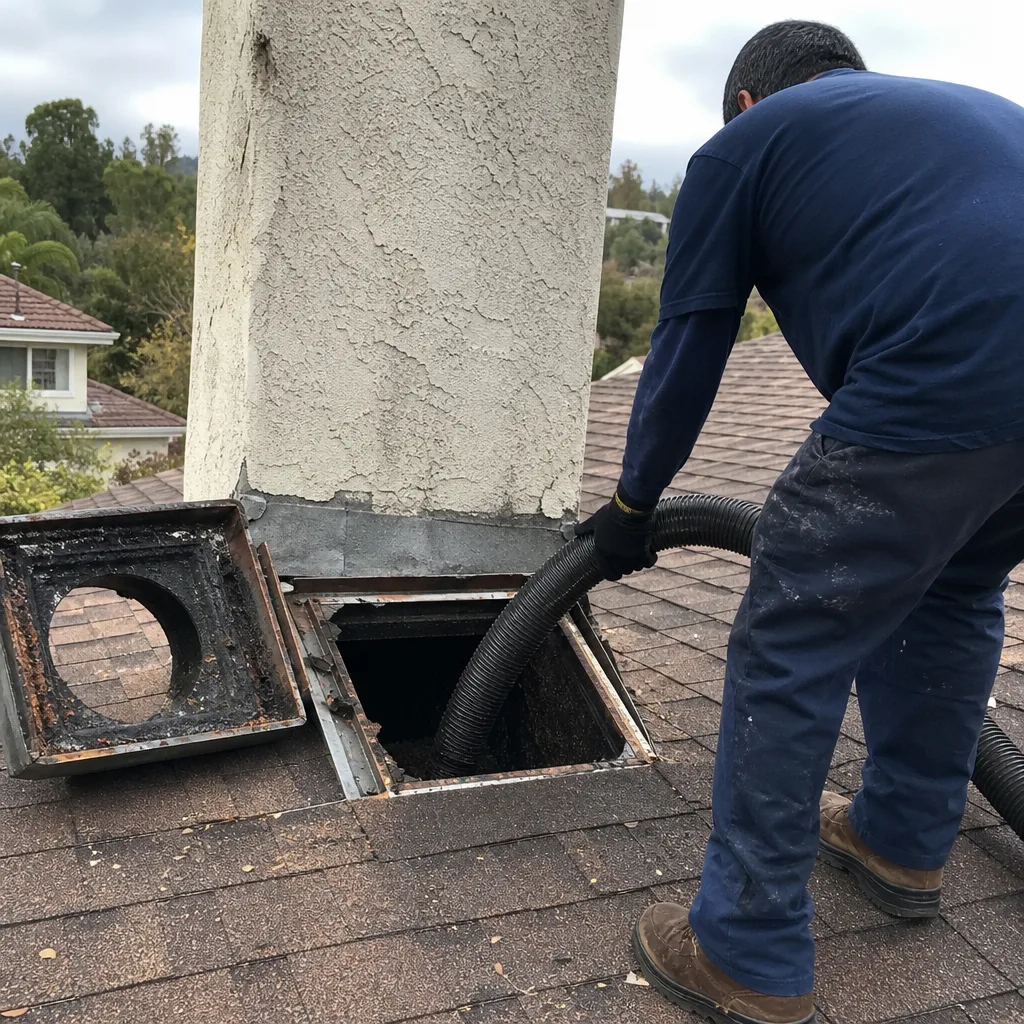 Before
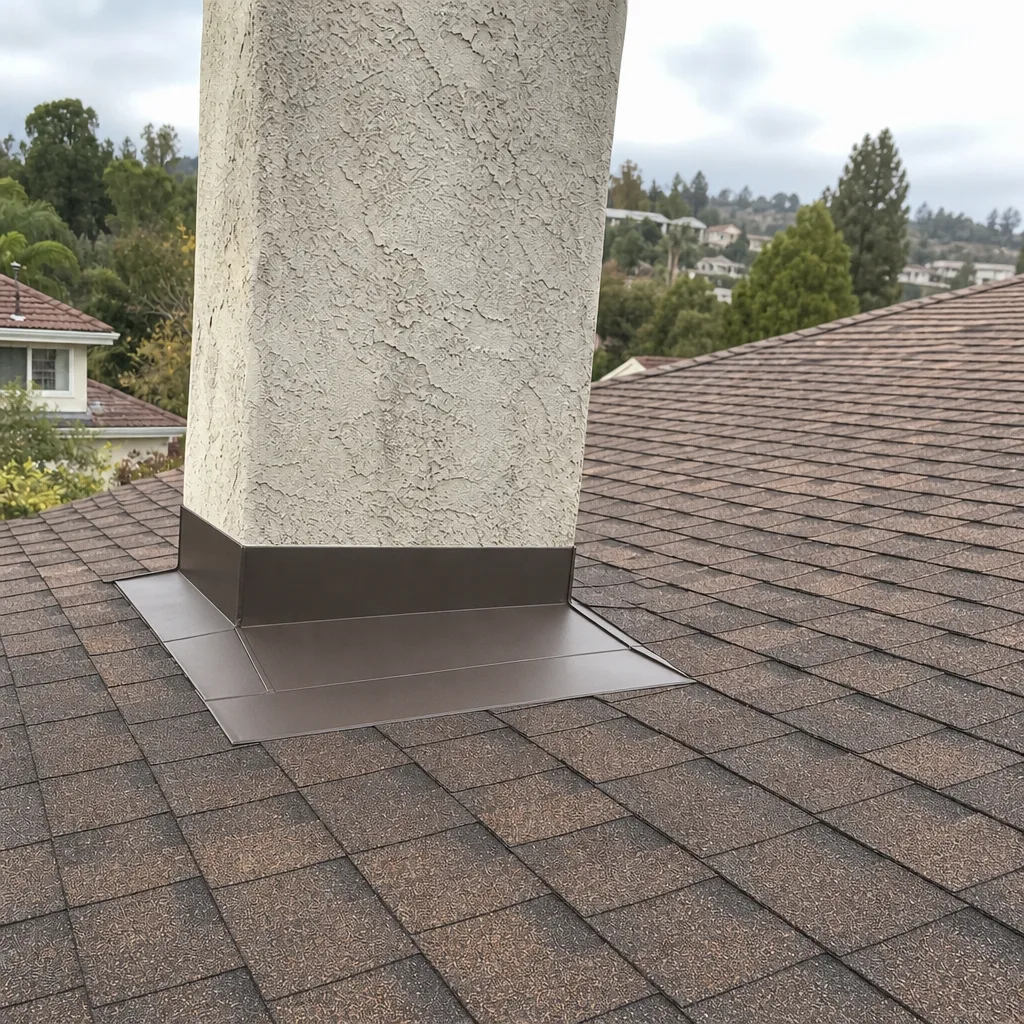 After
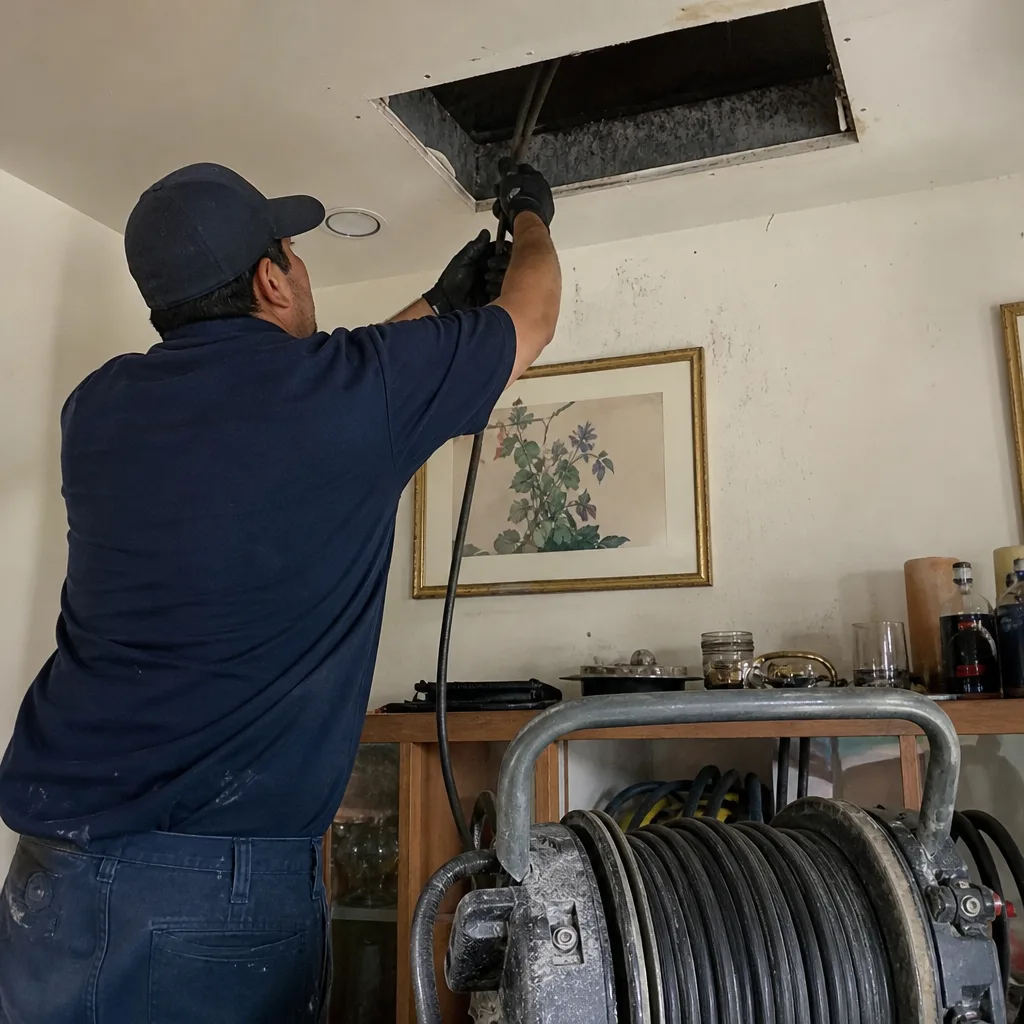 Before
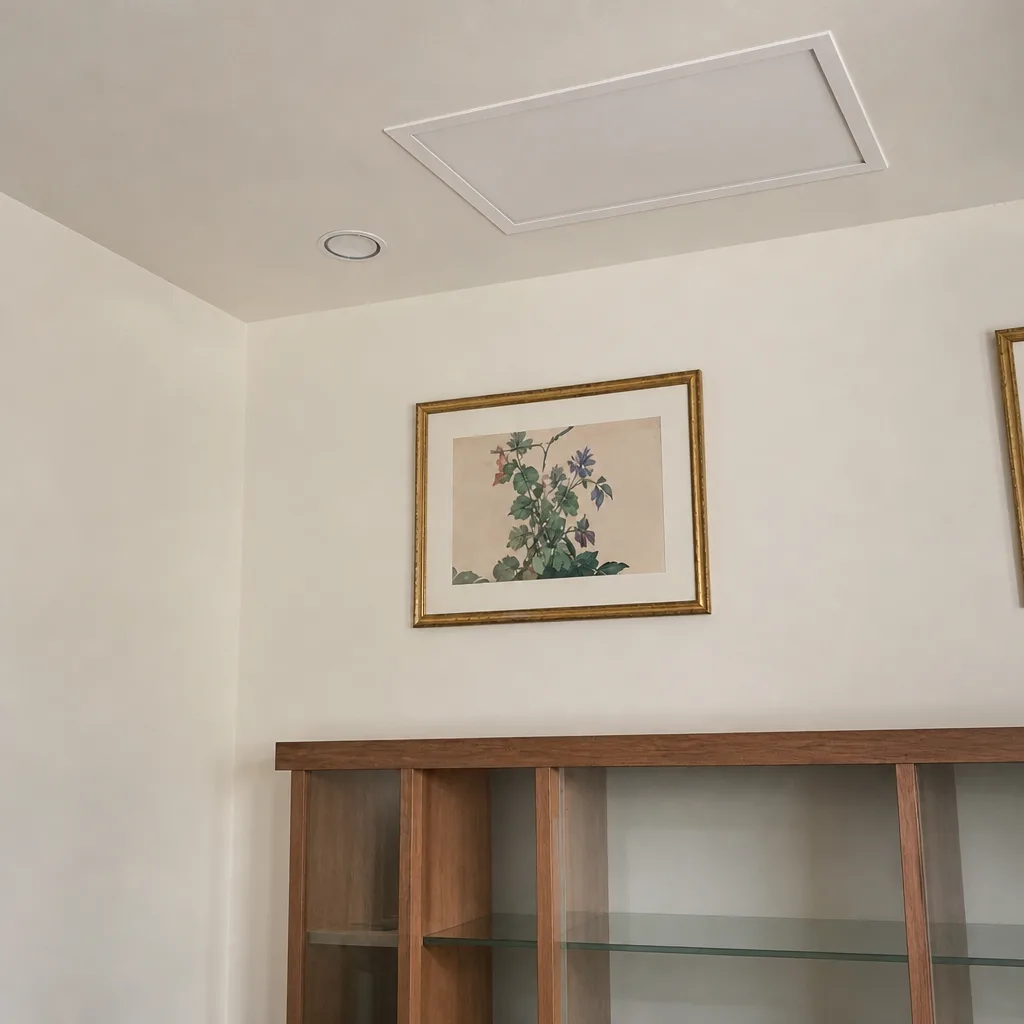 After
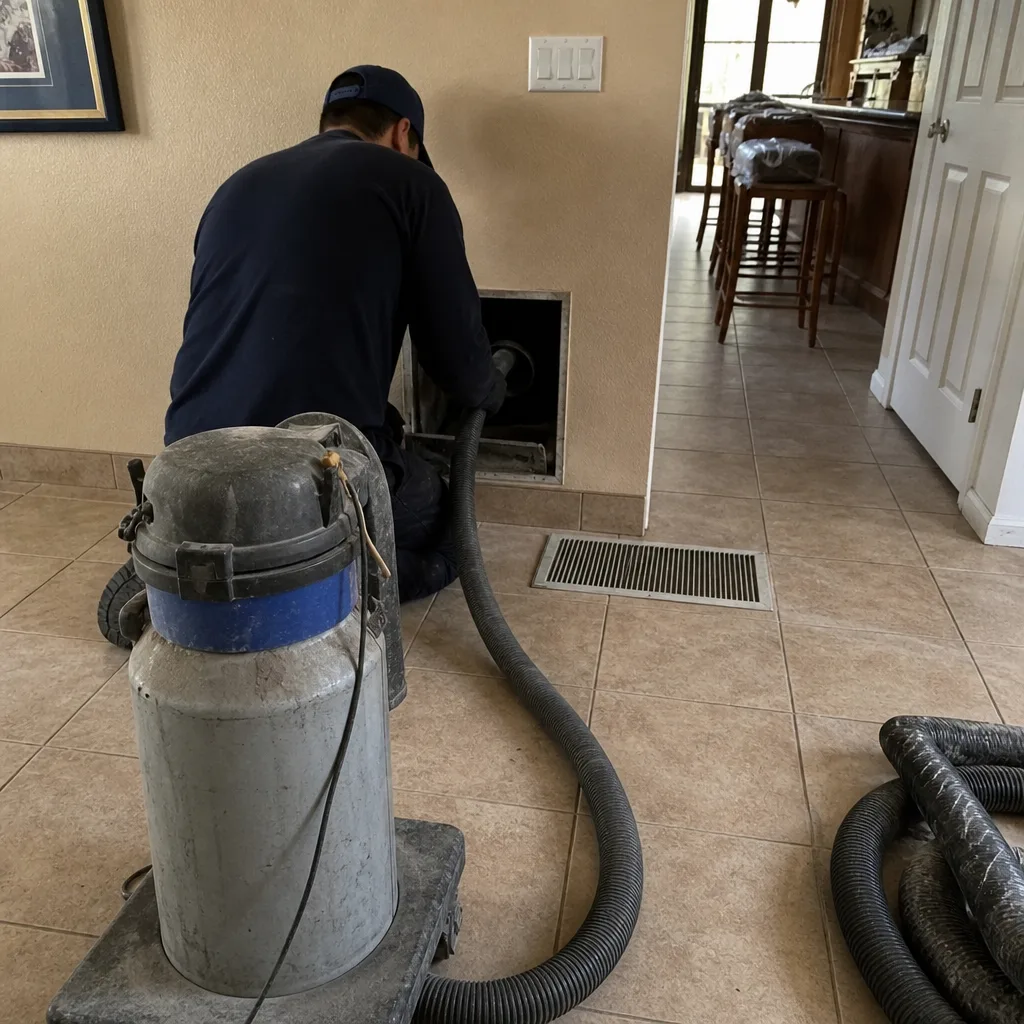 Before
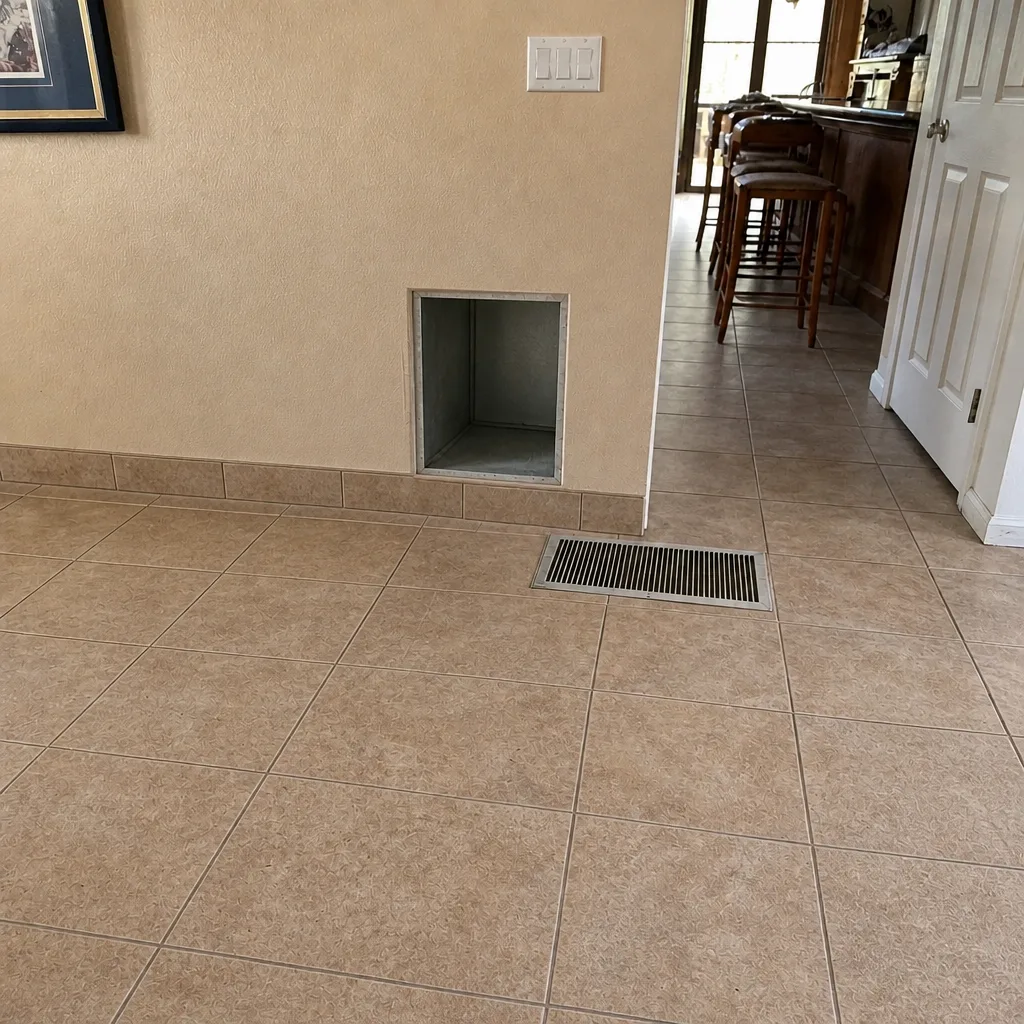 After
When to Call a Professional
Call a professional when your own inspection shows visible debris or matted dust inside multiple ducts, when your filter loads to the point of restriction before its rated interval, or when a musty smell, staining, or moisture points to a condition that shouldn’t be left in place. Call sooner after wildfire smoke events, interior remodels, or water intrusion, and anytime you’re seeing a dust pattern come out of your supply registers. Call when you find a fouled coil or a visibly coated blower wheel, or when you discover a loose duct run or a failed connection, because repair and sealing are the next step. Air Duct Cleaning Porter Ranch offers free estimates in Porter Ranch, and the price is set per job by the written estimate. Call (833) 570-5137 to book an assessment.
Frequently Asked Questions
Most whole-system cleanings in Porter Ranch fall in the several-hundred-dollar range depending on home size, duct accessibility, and whether repair or sealing is included. We quote one flat price per system after assessing the home, and the written estimate sets the final price. Call (833) 570-5137 for an exact quote.
Cheap quotes usually price per vent and skip the parts of the job that take time: containment, coil and blower cleaning, and any repair work. The invoice grows once the technician is on site. A flat price per system, agreed in advance, is the safeguard. Call (833) 570-5137 to get a written estimate.
Ask for before-and-after photos of your own ducts, taken by the technician. We provide them as part of every job, and they’re the clearest record you’ll have. Call (833) 570-5137 and ask for the photos as part of the estimate.
Most Porter Ranch homes land on a biennial schedule with event-driven inspections, shifting to annual for homes with pets, allergy sufferers, or fast-loading filters. Your filter-loading index and event log are the deciding factors. Call (833) 570-5137 to have a technician look at your specific home.
Not automatically. It means your ducts need inspecting. Check your filter loading and do a register inspection after the event; if the system looks clean and loading returns to baseline, you can reasonably wait. Call (833) 570-5137 if your inspection turns up debris or a persistent musty smell.
Yes. We handle cleaning, repair, and sealing together, so leaks or damaged runs found during the job get addressed without a second appointment. That’s the advantage of full-lifecycle coverage on a single visit. Call (833) 570-5137 to book a combined assessment.
The Bottom Line
Duct maintenance in Porter Ranch isn’t a calendar question, it’s an observation question. Read your filter-loading rate. Log your events. Do a five-minute register inspection with a flashlight and your phone. Include the coil, drain pan, and blower in the checklist, and don’t forget the dryer vent. When the signals line up, get a professional cleaning with containment, contact cleaning, and source removal, and insist on one flat price per system plus before-and-after photos. That’s how you get air you can verify, not just claim.
We answer 24/7. Fast dispatch from 7am to 7pm, Sunday through Friday. Call (833) 570-5137 for a free estimate.
Written by the team at Air Duct Cleaning Porter Ranch.